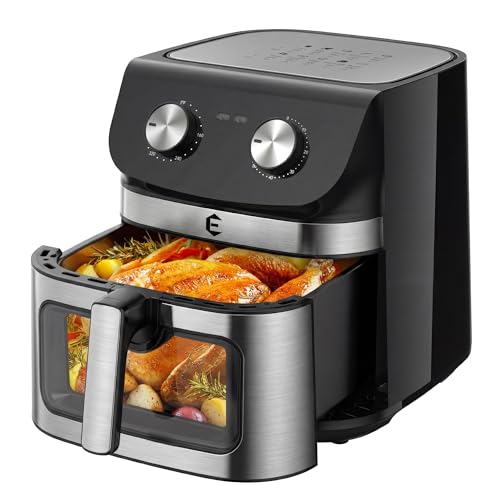
Dinner rarely cooperates with one timer. Fries want a short, hot run while chicken thighs prefer a longer, gentler ride, and a single drawer forces those foods into sequence. A dual basket design splits the appliance into two zones, while a single basket keeps one deep drawer and a simpler routine.
This dual basket vs single basket air fryer guide for September 2026 sorts the decision into the factors that genuinely change weeknight cooking. And if you are still deciding whether a basket design suits your kitchen at all, our air fryer vs convection oven comparison covers the wider appliance question.
Meal Composition Decides More Than Anything
The strongest case for two baskets is a dinner that combines foods needing different times and temperatures. Wings can run hot and fast in one zone while vegetables roast gently in the other, and both reach the table together. If that describes most of your weeknights, the dual format justifies its footprint.
A single basket fits cooks who prepare one food at a time, reheat leftovers, or make unified recipes such as a tray of seasoned potatoes. Sequencing two batches is a mild inconvenience when everything shares a setting. It only turns tedious when several components demand separate schedules night after night.
Usable Capacity and Food Shape
Advertised capacity tells you less than it seems, because the number that matters is uninterrupted floor area. A divider cuts a drawer into two narrower zones, so a wide fish fillet, a flattened chicken breast, or a small baking dish may not fit either side.
Measure the widest foods you actually cook before choosing a format. One deep basket handles broad and awkward items more gracefully, while two smaller zones keep portions separated so juices and seasonings never mingle.
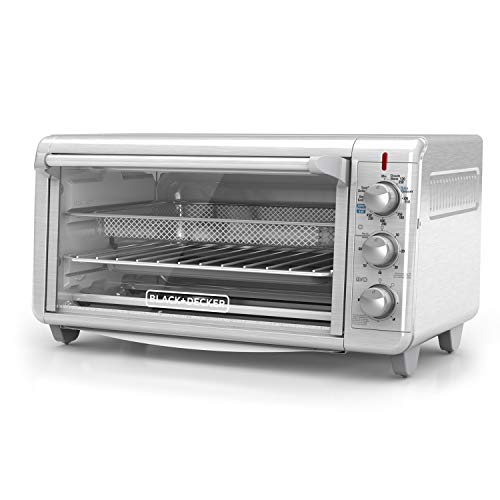
If your recipes regularly outgrow any drawer, a shelf-style design deserves a look. Our guide to air fryer toaster ovens covers models with wider racks for sheet pans, larger cuts, and baked dishes.
| Decision factor | Dual basket advantage | Single basket advantage |
|---|---|---|
| Mixed meals | Two zones run separate settings at once | Foods wait in sequence or share a setting |
| Wide or large foods | Compartment width can limit the fit | More uninterrupted floor area per batch |
| Small separate portions | Foods stay divided without mixing | Needs careful placement or accessories |
| Snacks and reheats | Extra zones and buttons to manage | One drawer, one setting, done |
Controls, Sync Features, and Workflow
Independent zones only help if the controls make them easy, so look for clear per-basket time and temperature settings. Many dual models advertise match cook or synchronized finish modes where both zones end together, though the exact behavior varies by manufacturer and model.
Judge a control panel by button presses rather than preset count, because programs you never use add clutter instead of speed. For repetitive jobs, a single basket is often quicker since you set one time and temperature and walk away.
Counter Footprint, Clearance, and Ventilation
Two side-by-side drawers usually mean a wider body, and width is the dimension most counters run out of first. Even so, real dimensions vary enough that the basket layout alone cannot predict whether a specific appliance fits your spot.
Measure width, depth, and overhead clearance where the appliance will live, including room to slide each basket out fully. Then follow the manufacturer’s ventilation guidance instead of pushing the unit flush against a wall or under a tight cabinet.
Cleaning and Daily Maintenance
Two baskets mean more parts to wash, typically a drawer and a crisper plate for each zone, plus extra corners where grease collects. The payoff is separation, because a greasy protein in one zone never shares a surface with dry foods.
Check the manual before placing any component in the dishwasher, since coating care instructions differ between brands. Avoid metal utensils and abrasive pads on coated surfaces unless the documentation explicitly allows them.
Value and Long-Term Fit
A second cooking zone pays for itself only when your weekly routine uses its independent settings often. Paying extra for a feature you reach for twice a month is a poor trade for added footprint and washing up.
Single basket models are usually the clearer value for snacks, leftovers, and one-dish dinners. Shoppers on a tight budget can compare our budget air fryer picks to see what the entry level handles well.
Why You Should Trust Us
We evaluate air fryer formats on usable cooking area, meal flexibility, controls, cleaning load, counter footprint, and documented compatibility. Those criteria reflect what changes daily ownership rather than what sounds impressive on a box.
No specific products were supplied for this comparison, so we have not invented model rankings, specifications, or hands-on findings. Our recommendation addresses basket formats, and buyers should confirm dimensions, controls, warranty terms, and included parts for any individual model.
Final Thoughts
For households that cook mixed meals most nights, the dual basket is our best overall format because independent zones solve the scheduling problem single-drawer owners work around constantly. It earns its space when two foods regularly need different settings and should still finish together.
The single basket is our best value format for one-main-food cooks, leftover reheaters, and snack makers. You skip the cost of a second zone and usually gain uninterrupted room for broad or awkward foods.
For oversized recipes such as a spatchcocked bird or a full sheet of vegetables, our best specific-use pick is the roomiest single basket that fits your counter. To keep comparing formats and appliances, browse our air fryers and countertop appliances category.
Frequently Asked Questions
Which design wins the dual basket vs single basket air fryer comparison in 2026?
Dual baskets win for mixed meals that need independent settings, while single baskets win for one large batch or wide foods. The overall winner depends on your usual meal composition more than on any advertised program count.
Is a dual basket air fryer worth it for a family of four?
It can be, when dinners regularly combine a protein and sides that need different settings. Families that mostly cook one food or heat snacks in rounds will find a large single basket simpler and easier to live with.
Can I use only one side of a dual basket air fryer?
Many dual basket models allow single-zone operation, but controls and behavior vary by design. Confirm the capability in the manufacturer’s manual rather than assuming both zones always run independently.
Does a dual basket air fryer cook two foods at different temperatures?
Most dual zone models offer independent time and temperature controls, though the feature should not be assumed universal. Check the control descriptions and manual for the specific appliance before buying it for that purpose.
Is one large basket better than two small baskets for chicken?
For whole birds, butterflied chicken, or several large pieces, one deep basket usually offers more usable floor area. Two smaller zones suit separated portions, boneless cuts, and foods that finish on different schedules.
Are dual basket air fryers harder to clean?
They normally involve more removable parts, since each zone may include its own drawer and crisper plate. Separation helps contain grease, but the extra components still add washing and drying time.
Do two baskets mean double the cooking capacity?
No, because stated volume says nothing about floor area, food spacing, or the shape of each compartment. Compare individual basket dimensions and loading guidance before estimating how many portions actually fit.
Are there other air fryer designs besides single and dual baskets?
Yes, glass-bodied and shelf-style air fryers change the visibility, loading, and cooking experience in different ways. Our glass air fryer vs basket air fryer walks through that separate decision.