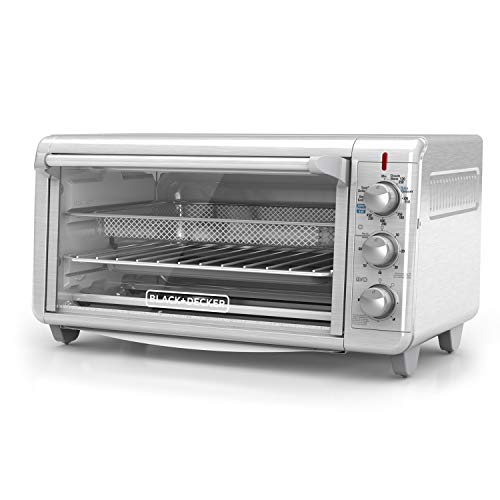
An air fryer suits cooks who prioritize quick preheating, concentrated airflow, and crisp results from modest portions. A convection oven makes more sense when capacity, bakeware compatibility, and cooking several portions together matter more.
This air fryer vs convection oven guide covers 1 listed products for September 2026, although no individual product records are currently available. For broader appliance research, explore our Air Fryers and Countertop Appliances coverage.
Cooking Capacity and Typical Portions
Capacity changes this decision more than almost any advertised feature. Basket air fryers generally favor smaller, spread-out portions, while convection ovens provide broader racks for larger meals.
Food needs open space around it for moving air to promote even browning. If you must stack ingredients or cook repeated batches, a larger convection oven can save active kitchen time.
| Buyer need | Air fryer advantage | Convection oven advantage |
|---|---|---|
| Small portions | Compact cooking chamber | More space than necessary |
| Family meals | May require batches | Wider rack area |
| Mixed foods | Best when timing matches | Multiple rack positions may help |
| Standard bakeware | Limited by basket shape | Usually more accommodating |
Compare usable dimensions rather than relying only on stated volume. A wide cooking surface often handles fries, vegetables, and cutlets more effectively than a deep but narrow basket.
Speed, Preheating, and Batch Time
An air fryer usually has a smaller chamber to heat, which can make it convenient for short cooking sessions. However, any time saved disappears quickly when dinner requires several separate batches.
Estimate total time as preheating plus cooking time multiplied by the number of required batches. A convection oven may finish a larger quantity sooner, even if its initial preheat takes longer.
Browning and Crispness
Both appliances use a fan to circulate heated air, but an air fryer concentrates that airflow within a smaller cavity. This design often favors crisp exteriors on fries, wings, vegetables, and reheated breaded foods.
A convection oven can brown effectively, especially when food is arranged on a shallow tray with adequate spacing. Results depend on airflow, rack position, moisture, food thickness, and whether the pan blocks circulation.
Neither appliance truly fries food without oil in the traditional sense. A light coating of oil can improve browning, but excessive oil may smoke, drip, or create difficult cleanup.
Cooking Versatility and Bakeware
Choose a convection oven when you regularly bake, roast, toast, broil, or use familiar pans. Its rectangular cavity is generally better suited to casseroles, pizzas, cookies, and several pieces of toast.
A basket air fryer is more specialized, but that simplicity can be useful for weeknight sides and reheating. An air fryer toaster oven splits the difference, as explained in our air fryer toaster oven guide.
Check the manufacturer’s permitted cookware materials and clearance requirements before using existing pans. Oven-safe does not automatically mean suitable when a vessel restricts airflow or sits too close to heating elements.
Counter Space and Storage
A basket air fryer may occupy less counter width, although tall bodies can conflict with upper cabinets. Convection ovens usually demand more width and depth because their doors and racks need working clearance.
Measure the intended location, ventilation clearance, door swing, and nearby outlet before choosing. Include space for removing a hot basket or tray without placing it near water, plastic, or counter edges.
Cleaning and Daily Handling
Air fryer baskets and crisper plates are removable, making crumbs and grease relatively contained. Their perforations, corners, and any coated surfaces still require gentle cleaning according to the appliance instructions.
Convection ovens provide easier visual access but expose more interior area to splatter. A removable crumb tray helps, while racks and sheet pans may require separate washing after greasy foods.
Consider which hot component feels easier for you to lift and maneuver safely. Basket handles simplify extraction, while oven trays require mitts and enough landing space for the entire hot pan.
Controls, Temperature Range, and Safety
Useful controls include adjustable temperature, a clear timer, and cooking modes you will actually use. Presets add convenience, but they do not account for portion size, food thickness, or starting temperature.
Confirm the required electrical circuit, ventilation clearance, and heat-safe placement in the manufacturer’s documentation. Never block vents, crowd heating elements, or assume accessories from another appliance are compatible.
Coating preferences may also influence your shortlist, particularly when baskets use nonstick finishes. Our guides to air fryers without Teflon and material-conscious air fryer options explain how to evaluate those claims cautiously.
Why You Should Trust Us
Our comparison prioritizes capacity, airflow, versatility, cleaning, storage, compatibility, and safe handling. We separate general appliance design differences from features that must be verified in an individual model’s documentation.
No product records or supported hands-on results were supplied for this comparison, so we do not name a model winner. Our recommendations are therefore format-based and conditional rather than unsupported endorsements of specific appliances.
Final Thoughts
For most one-person or two-person households prioritizing crisp food and short cooking sessions, a basket air fryer is the overall format winner. Its smaller chamber is especially practical for reheating leftovers and preparing a single side dish.
For value, keep an existing convection oven if it already fits your portions and performs reliably. Buying another appliance offers limited benefit unless faster small batches or easier food access would materially improve your routine.
For families, baking, pizza, and meals requiring broad pans, a convection oven is the better specific-use choice. Households wanting both approaches can compare air fryers for family meals before accepting the compromises of a hybrid design.
Frequently Asked Questions
What is the main difference in air fryer vs convection oven cooking?
An air fryer uses a compact chamber and forceful circulating air around a basket or perforated tray. A convection oven offers a larger cavity, broader racks, and greater compatibility with conventional bakeware.
Which air fryer vs convection oven option is better in 2026?
An air fryer is better for small, crisp portions and convenient reheating. A convection oven is better when you need capacity, versatile cooking modes, or space for standard pans.
Can a convection oven cook everything an air fryer can?
A convection oven can cook many of the same foods, but results and timing may differ. Its larger chamber may brown small portions less aggressively unless airflow and food spacing are well managed.
Does an air fryer use less electricity than a convection oven?
Energy use depends on wattage, cooking duration, preheating, and the number of batches required. A smaller chamber may help with modest portions, while repeated batches can reduce that advantage.
Is an air fryer better for a family?
It can work for a family when its usable cooking surface matches the household’s usual portions. Larger meals may require batches, making a convection oven or larger oven-style air fryer more practical.
Can I put regular oven cookware in an air fryer?
Only use cookware permitted by the appliance manufacturer and sized without obstructing airflow. A heat-safe material can still be unsuitable if it touches heating elements or prevents safe basket removal.
Which appliance is easier to clean?
Basket air fryers contain grease in removable components, although perforated parts can require careful scrubbing. Convection ovens have larger interiors but may offer straightforward racks, pans, and removable crumb trays.
Is an air fryer toaster oven a good compromise?
It can be useful when you want broader capacity and air frying in one appliance. Before choosing, compare its footprint, cleaning access, rack design, and cooking surface through our Countertop Ovens coverage.