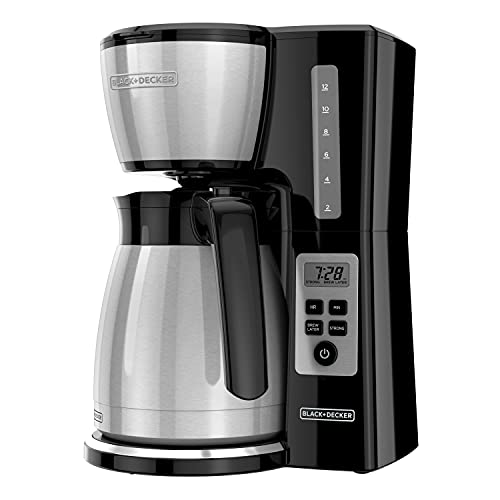
Mornings move fast and require a coffee setup that produces hot, balanced cups without fussy multistep prep. Selecting between simple mechanical brewers and fully programmable machines comes down to your household morning schedule. Our updated guide to best drip brewing coffee makers covers 6 versatile models for October 2026 to simplify your daily countertop routine.
Countertop space remains valuable in any kitchen setup, especially when organizing everyday appliances alongside items from our countertop appliances collection. Finding a machine that brews balanced extraction without burning your final cup makes all the difference before heading out the door.
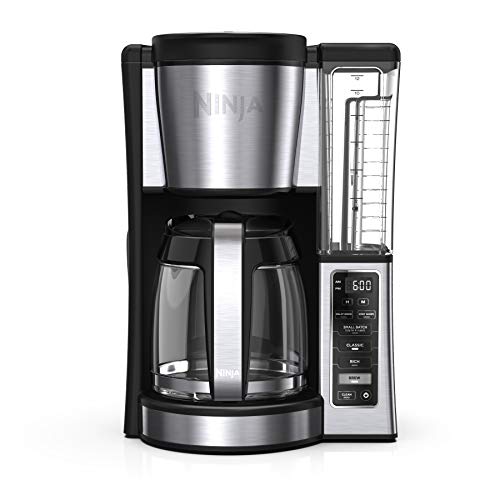
Pros
- Classic and Rich brew settings
- Small-batch brewing for 1 to 4 cups
- Removable 60-ounce water reservoir
- 24-hour programmable delay brew
- Mid-brew pause function
Cons
- Glass carafe loses heat faster than thermal designs
- Four-hour warming limit
- 14.6-inch height needs counter clearance
Specifications
| Color | Stainless Steel |
|---|---|
| Size | 12 Cup |
| Dimensions | 10.5 x 9.9 x 14.6 Inches |
| Weight | 6.55 Pounds |
| Product Group | Kitchen |
| Binding | Kitchen |
Verify the current product variation before purchase; specifications may change.
Detailed Review
What stands out in the currently available product data:
- Choose Classic or Rich brew strength for different coffee preferences
- Small-batch setting helps prevent dilution when brewing 1 to 4 cups
- 12-cup glass carafe supports daily brewing and entertaining
- 24-hour delay brew prepares coffee ahead of time
- Removable 60-ounce reservoir simplifies filling at the sink
- Four-hour adjustable warming plate keeps brewed coffee hot

Pros
- Fast full-carafe brewing
- Commercial-style stainless steel water tank
- 20-ounce travel-mug brewing
- Drip-free carafe design
- Three-year warranty
Cons
- Tall 14.3-inch countertop footprint
- Always-hot tank requires standby energy
- Manual water and coffee preparation
Specifications
| Color | Black |
|---|---|
| Size | large |
| Dimensions | 13.8 x 7.1 x 14.3 Inches |
| Weight | 8 pounds |
| Product Group | Kitchen |
| Binding | Kitchen |
Verify the current product variation before purchase; specifications may change.
Detailed Review
What stands out in the currently available product data:
- Brews a 50-ounce carafe in about 4 minutes
- Always-hot 70-ounce tank speeds morning coffee preparation
- Multi-stream sprayhead distributes water across grounds evenly
- Drip-free carafe helps keep counters cleaner while pouring
- Brews 4 to 10 cups or a 20-ounce travel mug
- Switch-activated warmer plate maintains serving temperature
Best For / Avoid If
Best for buyers prioritizing
- Fast full-carafe brewing
- Commercial-style stainless steel water tank
- 20-ounce travel-mug brewing
Consider another option if
- Tall 14.3-inch countertop footprint
- Always-hot tank requires standby energy
- Manual water and coffee preparation

Pros
- 14-cup glass carafe
- Adjustable warming plate temperature
- Regular and bold brew settings
- 24-hour programmability
- 1-4 cup brewing option
Cons
- Glass carafe needs careful handling
- Large footprint for compact kitchens
- Five-ounce cup definition may confuse capacity expectations
Specifications
| Color | Stainless Steel |
|---|---|
| Size | 14-Cup Glass |
| Dimensions | 7.75 x 9 x 14 inches |
| Weight | 12.786811196 Pounds |
| Product Group | Kitchen |
| Binding | Kitchen |
Verify the current product variation before purchase; specifications may change.
Detailed Review
What stands out in the currently available product data:
- 14-cup glass carafe supports larger household coffee batches
- Adjustable warming plate temperature helps manage serving heat
- Regular and bold settings match different taste preferences
- 24-hour programming prepares coffee around daily routines
- 1-4 cup setting supports smaller brewing needs
- Brew Pause allows pouring before brewing finishes

Pros
- 5-cup brewing capacity
- Reusable coffee filter
- Pause 'N Serve function
- Water-level indicator
- Compact countertop footprint
Cons
- Limited capacity for larger households
- No programmable timer listed
- Glass carafe requires careful handling
Specifications
| Color | Black |
|---|---|
| Size | 5-Cup |
| Dimensions | 7.87 x 6.61 x 9.25 inches |
| Weight | 2.9101018584 pounds |
| Product Group | Kitchen |
| Binding | Kitchen |
Verify the current product variation before purchase; specifications may change.
Detailed Review
What stands out in the currently available product data:
- 5-cup capacity fits individual servings or small households
- Semi-transparent reservoir makes water level easy to monitor
- Reusable filter reduces dependence on disposable paper filters
- Pause 'N Serve lets you pour during brewing
- Glass carafe supports serving a freshly brewed batch
- Compact footprint suits kitchens with limited counter space
Best For / Avoid If
Best for buyers prioritizing
- 5-cup brewing capacity
- Reusable coffee filter
- Pause 'N Serve function
Consider another option if
- Limited capacity for larger households
- No programmable timer listed
- Glass carafe requires careful handling

Pros
- 12-cup glass carafe
- 24-hour programmable brewing
- Sneak-A-Cup pause feature
- Visible water window
- Large rubberized controls
Cons
- Requires standard paper coffee filters
- Five-ounce cup definition may understate serving size
- Glass carafe needs careful handling
Specifications
| Color | Black |
|---|---|
| Size | 12 Cup |
| Dimensions | 8.25 x 12.25 x 11 inches |
| Weight | 4.5 pounds |
| Product Group | Kitchen |
| Binding | Kitchen |
Verify the current product variation before purchase; specifications may change.
Detailed Review
What stands out in the currently available product data:
- 12-cup Duralife glass carafe supports larger household batches
- Measurement markings help guide accurate water filling
- Sneak-A-Cup pauses flow for an early pour
- Front-facing water window improves fill visibility
- 24-hour programming supports scheduled morning brewing
- Large rubberized controls and readable display simplify operation
Best For / Avoid If
Best for buyers prioritizing
- 12-cup glass carafe
- 24-hour programmable brewing
- Sneak-A-Cup pause feature
Consider another option if
- Requires standard paper coffee filters
- Five-ounce cup definition may understate serving size
- Glass carafe needs careful handling

Pros
- 12-cup brewing capacity
- Vortex Technology showerhead
- Dishwasher-safe filter basket
- Sneak-A-Cup pause feature
- Non-drip carafe spout
Cons
- No programmable timer listed
- Carafe must return within 30 seconds
- Keep-hot plate requires ongoing power
Specifications
| Color | Black |
|---|---|
| Size | 12-Cup |
| Dimensions | 11 x 8.2 x 12.2 Inches |
| Weight | 3.66 Pounds |
| Product Group | Kitchen |
| Binding | Kitchen |
Verify the current product variation before purchase; specifications may change.
Detailed Review
What stands out in the currently available product data:
- 12-cup capacity supports batch brewing for households or gatherings
- Vortex Technology helps saturate grounds more evenly during brewing
- Sneak-A-Cup pauses flow for an early pour with less mess
- Non-drip spout helps limit spills while serving coffee
- Dishwasher-safe removable basket simplifies cleanup
- Basket-style paper filter compatibility gives flexible brewing options
Best For / Avoid If
Best for buyers prioritizing
- 12-cup brewing capacity
- Vortex Technology showerhead
- Dishwasher-safe filter basket
Consider another option if
- No programmable timer listed
- Carafe must return within 30 seconds
- Keep-hot plate requires ongoing power
Buying Guide for the Best Drip Brewing Coffee Makers
Water Temperature Stability and Contact Time
Water temperature directly determines how effectively solubles dissolve from ground beans during the brew cycle. Brewing below optimal heat levels yields flat and sour flavors, while excessive temperatures produce harsh bitterness. Machines built with commercial internal reservoirs maintain steady heat continuously rather than warming cold water in small bursts.
Contact time between hot water and coffee grinds dictates proper flavor extraction. Rapid brewers push water through in mere minutes, requiring a balanced grind profile to avoid weak pots. Slower flow rates need coarser grounds so grounds do not overextract and create muddy residue in your mug.
Carafe Capacity and Batch Management
Standard household batch sizes vary significantly from compact five-cup models up to generous fourteen-cup carafes. Note that coffee measurements define a cup as roughly five fluid ounces rather than a standard measuring cup. Purchasing oversized capacity for a solo drinker often results in stale grounds and excessive morning waste.
Dedicated small-batch settings adjust flow rates automatically when brewing partial volumes under four cups. Standard machines without this setting often drain water too quickly past shallow grounds, resulting in weak coffee. If you routinely alternate between single servings and entertainment batches, prioritize models with tailored flow geometry.
Showerhead Geometry and Grounds Saturation
A single center spout often drills a channel directly through the bed of grounds, leaving dry perimeter pockets. Wide multi-stream showerheads spray droplets evenly across the entire surface to extract flavor uniformly. Specialized vortex patterns spin water outward to thoroughly immerse the filter basket before draining.
Even saturation prevents bitter channeling where water takes the path of least resistance through central grounds. When water touches every grain at identical rates, you achieve a cleaner cup profile without needing manual stirs. Uniform extraction also reduces the quantity of coffee scoops needed per carafe.
Warming Plate Controls and Heat Retention
Standard heated warming plates risk scorching remaining coffee if left running unattended past the first hour. Advanced brewers provide adjustable plate temperature switches set to low, medium, or high to preserve fresh flavors. Automatic shutoff timers provide critical safety assurance while preventing baked-on glass stains during busy work mornings.
Households keeping coffee warm over extended hours benefit from gentle thermal settings that avoid continuous boiling. Excessive continuous heating burns delicate flavor compounds into an unpalatable, acidic mess. Exploring other efficient electric kitchen items, such as the best quiet air fryer, highlights how modern appliances balance heating performance with quiet convenience.
Reservoir Accessibility and Ergonomics
Fixed rear water reservoirs present clumsy refilling challenges when tucked underneath standard kitchen upper cabinets. Removable clear tanks let you carry the reservoir straight to the sink for rapid spill-free refills. Machines with fixed tanks require careful carafe pouring, which risks drips down the cabinet exterior.
Transparent water level windows placed on the front face allow instant visibility before initiating a brew cycle. Ergonomic considerations include comfortable carafe handle angles, secure lid hinges, and spout designs that prevent liquid counter dribbles. Small details like these streamline busy mornings and reduce routine countertop wipe-downs.
Programming Flexibility and Daily Operation
Twenty-four-hour programmable timers enable simple advance setup so freshly brewed coffee waits when waking up. Simple mechanical switch machines forego digital clocks entirely, relying on pure manual push-button reliability that pairs well with smart wall plugs. Decide whether you prefer waking to automatic brewing or prefer instant manual controls with fewer electronic failure points.
Mid-brew pause mechanisms, often called sneak-a-cup valves, briefly halt basket dripping when removing the carafe early. This feature prevents messy sizzling on hot plates when you cannot wait for the final drops. Just remember to return the carafe promptly within thirty seconds to prevent grounds overflowing the basket.
Why You Should Trust Us
Our editorial approach prioritizes objective appliance specifications, verified mechanical layouts, and daily usability realities over brand marketing promises. We evaluate technical details like reservoir materials, heating wattage stability, carafe pour geometry, and filter basket compatibility across mainstream kitchen models. Our team examines how design choices impact flavor extraction, morning workflow speed, and long-term countertop durability.
We remain completely transparent about product tradeoffs, recognizing that no single machine meets every household requirement perfectly. We do not manufacture synthetic testing results or claim lab verification where simple engineering analysis provides clear answers. Our advice guides your purchasing decisions by highlighting exactly how product dimensions, brew mechanics, and cleaning requirements fit ordinary home environments.
Final Thoughts
Choosing among top brewers requires aligning batch capacity, morning preparation habits, and maintenance tolerance with your daily kitchen rhythm. For buyers seeking customizable strengths, removable water refilling, and reliable batch tuning, the Ninja Fresh Brew Coffee Maker represents our best overall recommendation. Its dedicated small-batch setting and adjustable warming plate offer tremendous versatility for diverse household tastes without complicating daily prep.
If budget efficiency and simple dependable functionality matter most, the BLACK+DECKER 12-Cup Drip Coffee Maker with Vortex delivers our best value pick. It provides programmable auto brew and multi-stream showerhead extraction at an accessible everyday price point. For matching budget-conscious small appliances across your kitchen workspace, explore our breakdown of the best air fryer under $50 for similarly economical countertop tools.
For large families or heavy morning coffee drinkers needing rapid output, the Cuisinart Coffee Maker, Programmable serves as an ideal high-capacity specialist. Its expansive fourteen-cup carafe and adjustable plate heater ensure hot refills throughout the morning without mid-cycle degradation. Select the configuration that best supports your morning timeline and typical serving sizes.
FAQs
What makes the best drip brewing coffee makers produce better flavor than basic machines?
Advanced drip brewers achieve superior flavor by maintaining stable brewing temperatures and utilizing broad showerhead spray patterns. Even water dispersion prevents channeling, ensuring that all ground coffee extracts evenly rather than scorching the center or leaving edges dry.
How often should you descale drip coffee brewers in 2026?
Standard household machines require descaling every one to three months depending on regional tap water hardness and usage frequency. Mineral accumulation inside internal heating coils slows water flow, lowers brew temperatures, and can trigger premature mechanical failure if neglected.
Can you brew small batches in a large twelve-cup coffee maker?
Yes, but models equipped with dedicated one-to-four cup settings brew smaller volumes significantly better. These programs slow down water flow rates to ensure proper ground contact time despite shallower coffee beds in wide baskets.
Are paper filters better than reusable permanent mesh filters?
Paper filters trap microfine grounds and coffee oils, creating a brighter, clearer cup profile while simplifying quick cleanup. Permanent gold-tone mesh filters allow natural aromatic oils and fine sediments to pass through, resulting in heavier body while eliminating ongoing paper waste.
Why does coffee from warming plates sometimes taste bitter or burned?
Heated metal plates continuously apply direct bottom heat to glass carafes, causing lingering liquid to slowly evaporate and cook remaining solubles. Opting for machines with adjustable low-temperature warming settings or transferring coffee to thermal carafes protects original flavor balances.
What is the benefit of an internal hot water tank design?
Commercial-style internal tanks hold preheated water constantly ready to brew full pots in roughly three to four minutes. This eliminates the standard delay of heating cold water from scratch, though machines draw modest standby power to maintain that internal reservoir.
How do coffee makers fit into overall kitchen appliance power management?
Coffee brewers pull substantial wattage during active heating, making it wise to avoid running them concurrently on the same circuit branch as heavy items like countertop air fryers. Reviewing tools like our best air fryer under $150 helps plan countertop layouts with sensible electrical spacing.
Does coffee grind size matter for standard drip brewing machines?
A consistent medium grind functions best for flat-bottom and cone drip baskets. Excessively fine grinds restrict drainage and cause basket overflows, while overly coarse grinds allow water to pass too quickly without extracting balanced flavor.