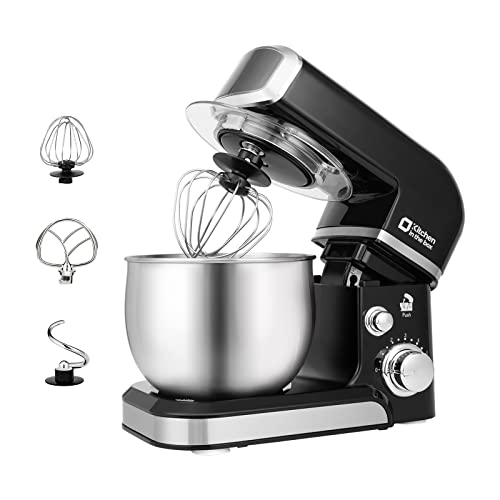
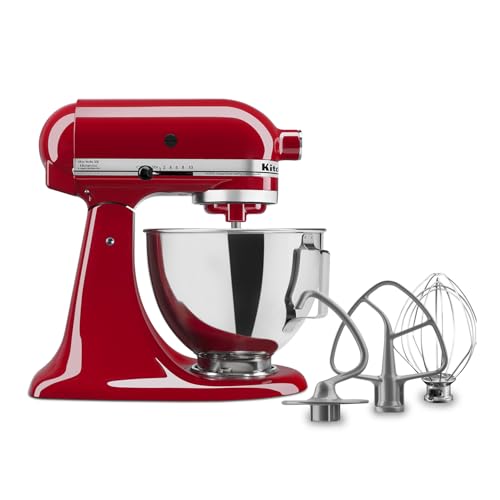
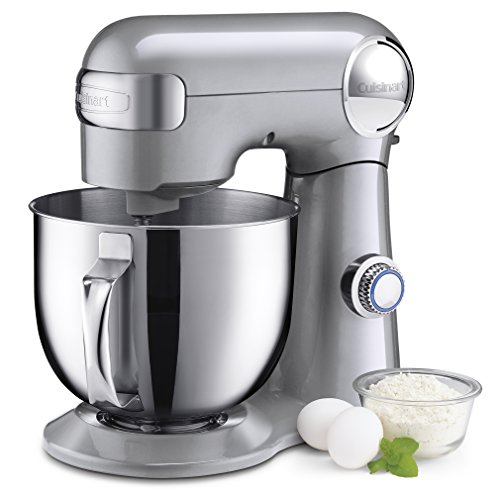
Stand mixer wattage can help you compare machines, but the number does not tell the whole performance story. Motor design, gearing, bowl capacity, speed control, and workload usually matter just as much for ordinary home baking.
This guide explains stand mixer wattage in practical terms for September 2026, including how to interpret 1 listed models. For related buying context, compare this guide with our stand mixer guide for heavy dough before choosing a machine.
Wattage versus usable mixing power
Wattage describes electrical power input or motor rating, depending on how the manufacturer presents the specification. It does not directly measure the force reaching the attachment while ingredients are mixing.
A higher wattage can suggest greater electrical capacity, but efficiency and transmission design determine how much power becomes useful mixing action. Treat watts as an initial comparison point, not a complete performance ranking.
Torque and gearing for demanding mixtures
Torque is the twisting force that helps an attachment keep moving when a mixture becomes thick or resistant. This matters most for bread dough, dense cookie dough, enriched dough, and large batches.
Manufacturers do not always publish comparable torque figures, so you may need to assess gearing, recommended capacities, and operating guidance instead. A moderate wattage mixer with efficient gearing may suit heavy work better than a higher wattage model with weaker transmission design.
Batch size and bowl capacity
Motor power should be matched to the amount and type of food you plan to mix regularly. A compact bowl may suit frosting, whipped cream, and small cake batches, while frequent bread baking demands more usable capacity.
Do not assume the largest bowl supports every recipe at maximum volume. Ingredients expand during whipping, flour can climb the sides, and dough needs room for the hook to work without unnecessary strain.
Speed control and low speed behavior
Speed range matters because different tasks need different attachment movement. Low speeds help incorporate flour gradually, medium speeds build structure, and higher speeds support whipping when the recipe calls for it.
A useful mixer should provide controlled starts rather than jumping aggressively into motion. Smooth speed changes reduce ingredient clouds and give you better control when switching between folding, kneading, beating, and whipping.
Attachments and compatibility
Attachments can expand a stand mixer into a broader food preparation system, but compatibility is rarely universal. Check the exact mixer series, hub design, included accessories, and manufacturer instructions before planning future purchases.
For occasional baking, a whisk, flat beater, and dough hook may cover nearly every need. If you want pasta rolling, grinding, slicing, or spiralizing, attachment cost, storage, cleaning, and availability become part of the ownership decision.
Heat, noise, and operating limits
Long mixing sessions can place more demand on a motor than short cake or frosting recipes. Follow the manufacturer’s guidance for dough quantities, speed settings, rest periods, and any stated overload protection.
Wattage does not reliably predict noise because sound depends on motor construction, gearing, housing, and the attachment under load. If a quieter kitchen matters, our quiet motor stand mixer comparisons provide a more relevant starting point.
Cleaning, storage, and long term ownership
A powerful mixer is less useful if its bowl, attachments, and housing make routine cleanup difficult. Look for removable accessories, clear care instructions, and a footprint that fits your counter or storage area.
Ownership also includes replacement attachments, warranty terms, service options, and the likelihood that you will leave the machine assembled. A lighter mixer may be easier to store, while a heavier model may be more convenient if it stays ready for frequent baking.
How to match wattage to your baking routine
For occasional cakes, whipped cream, and light batters, prioritize smooth controls, useful accessories, and easy storage before chasing the highest wattage. These tasks usually place less sustained resistance on the motor than dense dough.
For weekly bread baking, compare dough guidance, bowl capacity, gearing information, and the manufacturer’s recommended workload. A reliable match depends on batch size and recipe type, not simply the largest number printed on the box.
For a small kitchen, footprint and lifting weight may outweigh extra capacity. If you mainly need occasional mixing, a hand mixer comparison may reveal a simpler option with less counter commitment.
| Baking routine | Prioritize | Potential tradeoff |
|---|---|---|
| Light batters and frosting | Control, whisk performance, easy cleaning | Extra power may add cost and bulk |
| Frequent bread dough | Torque, gearing, capacity, workload guidance | Heavier machines take more storage space |
| Mixed baking tasks | Balanced power, attachments, speed range | More accessories increase cleanup needs |
Why You Should Trust Us
We separate documented specifications from editorial interpretation and avoid treating wattage as a substitute for complete performance evidence. Because no product data is supplied for this page, we cannot make product specific claims about motor behavior, noise, durability, or included accessories.
Our evaluation framework focuses on the factors that change daily ownership: workload, torque, bowl capacity, controls, compatibility, cleaning, storage, warranty information, and value. When manufacturer documentation does not provide a comparable detail, the responsible conclusion is to identify the gap rather than invent precision.
Final Thoughts
The best overall approach is to choose a mixer whose documented workload and capacity match your usual recipes, then use wattage as supporting evidence. Since Products Data is empty here, no specific model can be named as a defensible overall recommendation.
The best value approach is usually the simplest machine that handles your recurring tasks without paying for unused attachments or capacity. Buyers focused on bread should prioritize torque related evidence and workload guidance, while occasional bakers may value control and storage more than maximum wattage.
For another perspective, see our guide to the stand mixer features that matter in a lower budget purchase. Revisit the comparison once product data is available, because a model recommendation requires verified specifications rather than assumptions.
FAQs
What does stand mixer wattage mean?
Wattage generally describes electrical power input or a stated motor rating, depending on the manufacturer’s specification. It does not independently reveal torque, efficiency, noise, or mixing results.
Is higher wattage always better for a stand mixer?
No. Higher wattage may support greater electrical demand, but gearing, motor efficiency, capacity, controls, and workload limits also affect suitability.
How many watts does a stand mixer need for bread dough?
There is no universal wattage threshold for bread dough because recipes, batch sizes, hydration, gearing, and manufacturer guidance vary. Compare the complete workload specification instead.
Does wattage tell me how much dough a mixer can handle?
No. Capacity depends on the bowl, attachment design, dough characteristics, and manufacturer recommendations. Exceeding stated limits can increase strain and reduce control.
Does higher wattage make a stand mixer quieter?
Not necessarily. Noise depends on the motor, gearing, housing, attachment, and workload, so wattage alone cannot predict kitchen sound levels.
What should I prioritize besides wattage?
Prioritize torque related evidence, bowl capacity, speed control, attachment compatibility, operating limits, cleaning, storage, warranty terms, and your normal batch size.
Is stand mixer wattage explained differently by each brand?
Yes. Brands may describe input power, output power, peak power, or motor ratings differently, making direct wattage comparisons imperfect without additional documentation.
What is the right way to compare stand mixers in 2026?
Start with your recipes and batch sizes, then compare verified specifications against those needs. Our stand mixer guide for bread dough is useful when kneading is your main concern.