Outdoor cooking changes drastically once you transition from quick weeknight grilling to low-and-slow barbecue. The best backyard smoker grills let you maintain steady temperatures over hours, infusing meats with rich wood smoke without requiring round-the-clock monitoring.
Whether you want hands-on offset charcoal fire management or automated wood pellets, modern cookers offer massive capacity and precise heat stability. Selecting the ideal setup requires evaluating your patio footprint alongside your willingness to manage wood coals, which you can contrast with dedicated setups on our Grills and Smokers guide.
Our Top Picks
Short answer: MAISON BACKYARDS 616 Sq. In. Smoker is our top pick, and Royal Gourmet CC1830S, 823 Sq. In. is the runner-up.
- Top pickMAISON BACKYARDS 616 Sq. In. Smoker616 square inches of cooking capacity
- Runner-upRoyal Gourmet CC1830S, 823 Sq. In.823 square inches of total cooking space
| # | Product | Brand | Stands out for |
|---|---|---|---|
| 1 | MAISON BACKYARDS 616 Sq. In. Smoker | MAISON BACKYARDS | 616 square inches of cooking capacity |
| 2 | Royal Gourmet CC1830S, 823 Sq. In. | Royal Gourmet | 823 square inches of total cooking space |
| 3 | Oklahoma Joe's Canyon Combo, 1031 Sq. In. | Oklahoma Joe's | Charcoal smoking and propane grilling in one unit |
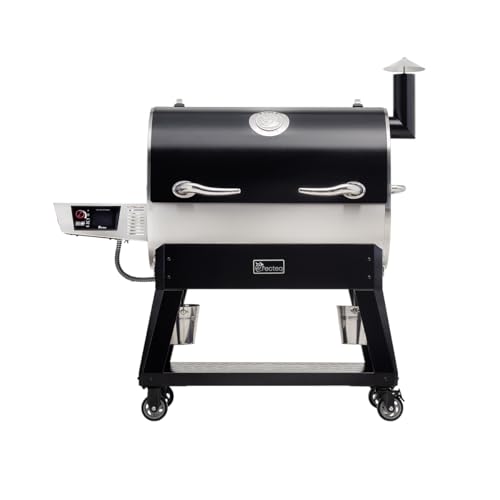
| 4 | recteq Flagship 1600 Pellet Grill, 1667 Sq In | recteq | Massive 1667 sq in cook space |
| 5 | Maison Backyards 4-Rack Smoker | MAISON BACKYARDS | Four adjustable chrome-coated racks |
| 6 | Oklahoma Joe's Longhorn Offset Charcoal Smoker and Grill with 1060 | Oklahoma Joe's | See the full review below |

Pros
- 616 square inches of cooking capacity
- Four movable racks and eight hooks
- Automatic ignition and digital controls
- Built-in meat probe
- Included waterproof cover
Cons
- 90-pound body limits easy relocation
- Requires electrical access outdoors
- Water pan needs filling before preheating
Specifications
| Color | Black |
|---|---|
| Size | 616 Sq.in |
| Dimensions | 17.3 x 29.5 x 42.5 inches |
| Weight | 90 pounds |
| Product Group | Lawn & Patio |
Verify the current product variation before purchase; specifications may change.
Detailed Review
What stands out in the currently available product data:
- Four movable racks and eight hooks organize large smoking sessions
- 616 square inches accommodates multiple meats for gatherings
- Three-liter hopper supports smoking for up to 20 hours
- Digital controls and automatic ignition simplify temperature setup
- Built-in meat probe helps monitor internal food temperature
- Vertical layout saves horizontal patio space
Best For / Avoid If
Best for buyers prioritizing
- 616 square inches of cooking capacity
- Four movable racks and eight hooks
- Automatic ignition and digital controls
Consider another option if
- 90-pound body limits easy relocation
- Requires electrical access outdoors
- Water pan needs filling before preheating

Pros
- 823 square inches of total cooking space
- Attached offset smoker
- Adjustable two-level charcoal pan
- Front and side workspace
- Built-in lid thermometer
Cons
- 45.2-pound outdoor cooking unit
- Bottom shelf limited to 20 pounds
- Large footprint for compact patios
Specifications
| Color | Black |
|---|---|
| Size | Grill |
| Dimensions | 28.56 x 51.69 x 46.89 inches |
| Weight | 45.2 Pounds |
| Product Group | Lawn & Patio |
| Binding | Lawn & Patio |
Verify the current product variation before purchase; specifications may change.
Detailed Review
What stands out in the currently available product data:
- Large 823-square-inch layout supports grilling, warming, and smoking
- Attached offset smoker adds smoke-cooking capability
- Adjustable charcoal pan changes food-to-heat distance
- Side door simplifies charcoal addition and ash removal
- Lid thermometer helps monitor cooking temperature
- Front and side tables keep tools and seasonings nearby
Pros
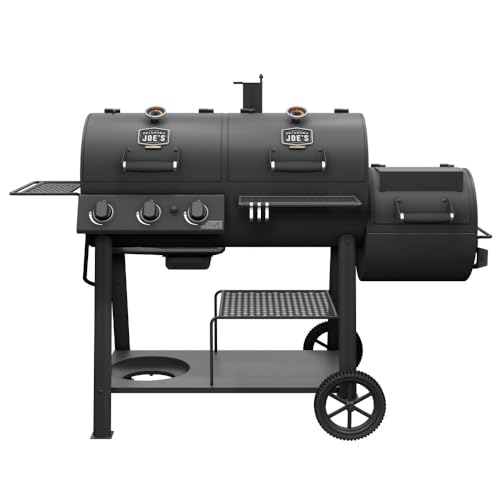
- Charcoal smoking and propane grilling in one unit
- 1031 square inches of total cooking area
- Porcelain-coated cast-iron grates
- Adjustable firebox and smokestack dampers
- Removable firebox ash pan
Cons
- Large outdoor footprint
- Propane tank not included
- Charcoal and wood sold separately
Specifications
| Color | Black |
|---|---|
| Size | Large |
| Dimensions | 35.6 x 68.9 x 50.8 inches |
| Product Group | Lawn & Patio |
| Binding | Kitchen |
Verify the current product variation before purchase; specifications may change.
Detailed Review
What stands out in the currently available product data:
- Switch between low-and-slow charcoal smoking and fast propane grilling
- 750-square-inch primary area handles large family meals
- 281-square-inch firebox grate adds space for wings or burgers
- Adjustable dampers help control fire intensity and smoke flow
- Porcelain-coated cast-iron grates retain heat and simplify cleanup
- Removable ash pan speeds charcoal firebox cleanup
Pros
- Massive 1667 sq in cook space
- Large 40-pound pellet hopper
- Wide 180F to 700F range
- Tight PID temperature regulation
- Durable stainless steel build
Cons
- Extremely heavy at 230 pounds
- Requires large patio footprint
- High initial investment
Specifications
| Color | Stainless Steel |
|---|---|
| Size | Extra Large |
| Weight | 230 pounds |
| Product Group | Kitchen |
Verify the current product variation before purchase; specifications may change.
Detailed Review
What stands out in the currently available product data:
- Massive 1,667 square inch surface handles high-volume cooks effortlessly
- Deep 40-pound hopper enables up to 40 hours continuous smoking
- Broad 180 to 700 degree Fahrenheit range supports slow smoking and direct searing
- PID digital controller maintains target temperature within 5 degrees
- Dual Wi-Fi connectivity enables complete remote monitoring via smartphone
- Heavy-gauge stainless steel construction resists outdoor weathering and rust
Best For / Avoid If
Best for buyers prioritizing
- Massive 1667 sq in cook space
- Large 40-pound pellet hopper
- Wide 180F to 700F range
Consider another option if
- Extremely heavy at 230 pounds
- Requires large patio footprint
- High initial investment

Pros
- Four adjustable chrome-coated racks
- Propane-powered outdoor setup
- Space-saving vertical design
- Included weather-resistant cover
- Removable drip tray
Cons
- Requires standard propane supply
- 60-pound body limits portability
- Outdoor use only
Specifications
| Color | Black |
|---|---|
| Size | Standard Size |
| Dimensions | 18.3 x 23.5 x 42.3 inches |
| Weight | 60 Pounds |
| Product Group | Kitchen |
Verify the current product variation before purchase; specifications may change.
Detailed Review
What stands out in the currently available product data:
- Four removable racks create flexible space for ribs, chicken, fish, vegetables, and more
- Adjustable rack placement helps fit different food sizes and cooking setups
- Propane power supports faster outdoor setup than charcoal-based smoking
- Vertical design promotes smoke circulation while reducing horizontal footprint
- Built-in heat control supports low-and-slow cooking with less guesswork
- Removable drip tray helps simplify cleanup after smoking sessions

Specifications
| Color | Black |
|---|---|
| Size | 1060 sq. in. |
| Dimensions | 36.5 x 64.3 x 55.5 inches |
| Weight | 253 Pounds |
| Product Group | Lawn & Patio |
| Binding | Lawn & Patio |
Verify the current product variation before purchase; specifications may change.
Fuel Type and Heat Control Mechanics
Fuel selection directly controls both everyday flavor depth and required user involvement. Offset charcoal smokers demand active timber fire management, where balancing airflow through side dampers determines sustained cooking heat and clean smoke output over many hours.
Automated pellet units use computerized augers and digital algorithms to feed compressed sawdust into firepots. This mechanism holds temperatures within tight margins, removing guesswork entirely for pitmasters who want dependable outcomes during overnight smoking sessions.
Propane-powered vertical cabinets deliver instant ignition and consistent burner flame adjustments. While gas yields clean heat rapidly, it requires added wood chip trays to produce aromatic smoke, matching patio cooks seeking low upkeep alongside reliable utility.
Chamber Layout and Usable Cooking Capacity
Square inches advertised by manufacturers often split between primary direct grates and elevated secondary racks. A horizontal offset provides wide grates perfect for resting large whole briskets and pork shoulders flat without crowding edges or impeding air movement.
Vertical smoker designs economize deck space by stacking removable wire racks directly over the heat source. This upright structure fits multiple racks of ribs or whole chickens vertically, though broad cuts may require slicing to avoid touching cabinet walls during cooking.
Dual-fuel horizontal grills bridge convenience by splitting chamber real estate across two distinct lids. You get quick propane searing zones alongside dedicated charcoal offset sections, which you can balance with smaller alternatives like our curated charcoal grills for small patios options.
Construction Materials and Thermal Retention
Metal gauge determines how reliably a smoker holds temperature when wind gusts or chilly ambient air strike the metal. Heavy-gauge carbon steel and double-walled stainless retain internal warmth efficiently, consuming less fuel to maintain target temperatures over extended sessions.
Budget smokers crafted from thin sheet metal often suffer from significant heat leakage and air draft infiltration. Users frequently need high-temperature gasket tape around chamber doors to prevent smoke loss, ensuring cooking environments remain stable throughout unpredictable seasonal weather changes.
Cooking grate composition also impacts day-to-day usability and cleanup duties across long cooking sessions. Porcelain-coated wire grates resist oxidation and simplify residue scrub downs, whereas heavy cast iron offers superior searing power at the cost of regular oil seasoning.
Airflow Dynamics and Damper Engineering
Combustion quality hinges entirely upon unimpeded convective draft running from fire intake vents up through the exhaust stack. Well-placed firebox baffles direct hot gases underneath food without singeing edges, allowing sweet wood smoke to pass over proteins cleanly.
Pinched or undersized exhaust chimneys create stagnant air pockets that impart harsh, bitter creosote deposits onto meats. Look for smoothly adjustable intake vents and tall smokestacks that provide fine-grained airflow regulation without letting raw fuel embers escape onto your deck.
In pellet cookers, forced-air draft fans regulate internal oxygen supply rather than passive sliding doors. Automated fans maintain continuous firepot combustion, circulating heat evenly around internal deflector plates for uniform roasting conditions, similar to designs explored in our pellet grill review.
Ash Removal and Grease Maintenance Systems
Extended barbecue sessions generate substantial grease run-off alongside piles of spent fuel ash. Dedicated slide-out firebox drawers let you dump accumulated charcoal residue without disrupting chamber temperatures, keeping internal air pathways clear throughout twelve-hour briskets.
Grease management systems prevent dangerous flare-ups by directing rendering fat toward external collector buckets safely. Sloped drip trays beneath cook racks catch droppings instantly, shielding burners and firepots from combustible grease buildup that could ruin delicate meat bark.
Cabinet cleanliness impacts flavor profiles over time by mitigating rancid grease smells inside cooking chambers. Removable interior components, dishwasher-safe water pans, and smooth porcelain coatings reduce scraping chores so maintenance stays manageable between weekend cookouts.
Feature Comparison
| Smoker Category | Fuel Source | Primary Advantage | Learning Curve |
|---|---|---|---|
| Classic Offset | Charcoal and Wood Splits | Deep traditional smoke ring | High (manual fire tending) |
| Smart Pellet Grill | Hardwood Pellets | Automated PID temperature control | Low (push-button operation) |
| Vertical Cabinet | Pellet or Propane Gas | Compact footprint, huge vertical rack space | Low to moderate |
| Combo Dual-Fuel | Charcoal and Propane Gas | Weeknight searing plus weekend smoking | Moderate |
Final Thoughts
For high-capacity automated outdoor cooking with commercial-grade construction, our top pick is the recteq Pellet Grill Smoker – Flagship 1600. Its massive 1667-square-inch cooking surface, stainless steel build, and precision PID temperature algorithm maintain heat within tight tolerances effortlessly. Home cooks seeking hands-off smoking across days-long barbecue feasts will appreciate its reliability, while budget-focused alternatives can be found on our guide to pellet grills under $500.
Shoppers looking to stretch their backyard budget without sacrificing classic offset smoke dynamics should consider the Royal Gourmet CC1830S BBQ Charcoal Grill. This unit provides an accessible entry point to charcoal smoking with 823 square inches of total space and an adjustable charcoal pan for heat management. It gives aspiring pitmasters authentic indirect wood smoke on a simple footprint that fits backyard patios.
If you want quick weeknight dinner convenience paired alongside traditional weekend barbecue, select the Oklahoma Joe’s Canyon Combo Dual Fuel 3-Burner. Its dual-chamber design lets you sear burgers quickly on a 36,000 BTU gas deck while slowly smoking ribs over charcoal in the offset firebox. It eliminates the need for two separate patio appliances, giving you both speed and authentic wood smoke.
FAQs
What makes the best backyard smoker grills different from standard barbecue grills?
Smoker grills utilize indirect heat pathways, keeping food separated from open flame sources over long durations. This airflow configuration lets wood smoke circulate gently across meats at low temperatures between 200 and 275 degrees Fahrenheit, tenderizing tough muscle fibers rather than searing surfaces directly.
How do pellet smokers compare to traditional charcoal offset smokers?
Pellet smokers use an automated auger system governed by digital sensors to deliver uniform cooking temperatures automatically. Charcoal offsets demand physical fire monitoring, vent adjustments, and wood additions every forty-five minutes, rewarding the cook with a deeper, more pronounced wood-fired flavor profile.
Can I use wood chips in a pellet grill smoker?
Wood chips should not be poured into automated pellet grill hoppers because their irregular shape jams mechanical augers instantly. Pellet cookers require uniform food-grade hardwood pellets, though you can use dedicated external smoker boxes resting on cooking grates to introduce alternative timber smoke.
Is a vertical smoker better for small backyard patios?
Vertical smokers use an upright footprint that minimizes ground space while offering ample interior shelf volume. Stacking cooking grates upwards lets you smoke multiple pork shoulders or poultry racks on tight decks, making them practical choices for compact residential spaces.
What is the easiest backyard smoker for beginners to operate in 2026?
Automated pellet smokers and vertical propane cabinets offer the easiest initial learning curve for new cooks. They regulate heat output with minimal user intervention, avoiding the temperamental firebox adjustments explained on our electric smokers for beginners overview.
How often should ash be cleaned from a backyard smoker grill?
Charcoal ash must be cleared after every cooking session because accumulated debris restricts intake damper airflow severely. Pellet firepots should be vacuumed every two to three cooks to prevent pellet dust buildup, which otherwise causes ignition delays or flameout errors.
Do dual-fuel combo smoker grills hold internal temperatures well?
Combo grills hold steady temperatures effectively when built with heavy-gauge steel lids and dependable firebox seals. Because the gas and charcoal sides operate via independent fireboxes, you can run separate temperatures simultaneously without cross-chamber heat bleeding.
Why is water pan placement important in backyard vertical smokers?
Water pans introduce ambient humidity inside the cooking cabinet, which slows meat surface evaporation and promotes deep smoke absorption. The water acts as a thermal buffer, stabilizing sudden internal heat spikes whenever outdoor breezes blow against the smoker walls.