
Cooking outdoors depends heavily on stable fuel delivery, yet stock lines frequently crack, leak, or fail to deliver consistent heat output. Upgrading hardware keeps your cooking station running smoothly across weekend barbecues and long holiday gatherings.
Finding the right connection requires checking thread standards, pressure limits, and overall hose length. Browse our broader Grills and Smokers resource center to see how fuel setups integrate with dedicated backyard cooking equipment.
Our Top Picks
Short answer: DOZYANT 3-Foot Propane Regulator Hose is our top pick, and NQN 6-Foot Propane Hose is the runner-up. If price matters most, Gas One 2106 3-Foot Propane Hose had the lowest listed price among these picks at our last update.
- Top pickDOZYANT 3-Foot Propane Regulator HoseBuilt-in propane tank gauge
- Runner-upNQN 6-Foot Propane HoseSix-foot extension length
- Budget pickGas One 2106 3-Foot Propane Hose3-foot replacement length
| # | Product | Brand | Stands out for |
|---|---|---|---|
| 1 | DOZYANT 3-Foot Propane Regulator Hose | DOZYANT | Built-in propane tank gauge |
| 2 | NQN 6-Foot Propane Hose | NQN | Six-foot extension length |
| 3 | Gas One 2106 3-Foot Propane Hose | Gas One | 3-foot replacement length |
| 4 | GrillAce 2-Ft Propane Regulator Hose | GrillAce | Compact 2-foot hose length |

Pros
- Built-in propane tank gauge
- Tool-free Type-1 tank connection
- Three-foot hose length
- Broad listed appliance compatibility
- Swivel nut design
Cons
- Requires compatible 3/8-inch male flare fitting
- Not suitable for unsupported connection types
- Gauge accuracy not documented in the listing
Specifications
| Color | Black |
|---|---|
| Size | 3 Feet |
| Dimensions | 7.6 x 3.2 x 5.3 inches |
| Weight | 0.7 pounds |
| Product Group | Lawn & Patio |
| Binding | Tools & Home Improvement |
Verify the current product variation before purchase; specifications may change.
Detailed Review
What stands out in the currently available product data:
- Built-in tank gauge helps track remaining propane before cooking
- Three-foot length supports flexible placement around outdoor appliances
- Tool-free Type-1 connection simplifies tank attachment
- Compatible with appliances using 3/8-inch male flare fittings
- 5/16-inch hose supports listed low-pressure propane applications
- Swivel nut can make alignment easier during installation
Best For / Avoid If
Best for buyers prioritizing
- Built-in propane tank gauge
- Tool-free Type-1 tank connection
- Three-foot hose length
Consider another option if
- Requires compatible 3/8-inch male flare fitting
- Not suitable for unsupported connection types
- Gauge accuracy not documented in the listing

Pros
- Six-foot extension length
- Stainless steel braided hose
- Five solid brass adapters
- 350 PSI high-pressure rating
- Two-year satisfaction guarantee
Cons
- Connector compatibility requires careful size verification
- Not a complete regulator or appliance conversion system
- Included fittings may exceed basic hookup needs
Specifications
| Color | Silver |
|---|---|
| Size | 6Feet |
| Dimensions | 72 x 1 x 1 inches |
| Weight | 1.67992243644 Pounds |
| Product Group | Lawn & Patio |
| Binding | Tools & Home Improvement |
Verify the current product variation before purchase; specifications may change.
Detailed Review
What stands out in the currently available product data:
- Six-foot reach gives compatible appliances more placement flexibility
- Stainless steel braiding supports corrosion resistance and flexible routing
- 350 PSI rating suits listed high-pressure propane applications
- Five brass adapters cover multiple flare and NPT connections
- 3/8-inch female flare ends support compatible appliance connections
- Included Velcro straps simplify hose storage and positioning
Best For / Avoid If
Best for buyers prioritizing
- Six-foot extension length
- Stainless steel braided hose
- Five solid brass adapters
Consider another option if
- Connector compatibility requires careful size verification
- Not a complete regulator or appliance conversion system
- Included fittings may exceed basic hookup needs
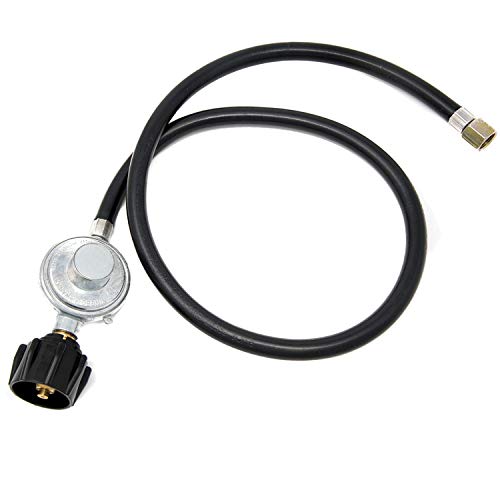
Pros
- 3-foot replacement length
- Type-1 QCC-1 tank fitting
- 80,000 BTU maximum
- Fiber-reinforced PVC construction
- Tool-free setup
Cons
- Compatibility requires matching fittings
- Low-pressure applications only
- Limited 3-foot reach
Specifications
| Color | 3ft |
|---|---|
| Size | 3 feet (Standard Fitting) |
| Dimensions | 3 x 3 x 1 inches |
| Weight | 0.87 Pounds |
| Product Group | Lawn & Patio |
| Binding | Lawn & Patio |
Verify the current product variation before purchase; specifications may change.
Detailed Review
What stands out in the currently available product data:
- 3-foot length fits many standard grill and fire pit setups
- Type-1 QCC-1 connection matches compatible propane tanks
- 3/8-inch female flare fitting supports compatible appliances
- 80,000 BTU maximum supports many low-pressure propane appliances
- Fiber-reinforced PVC hose adds structural durability
- Brass connections support a secure appliance connection
Best For / Avoid If
Best for buyers prioritizing
- 3-foot replacement length
- Type-1 QCC-1 tank fitting
- 80,000 BTU maximum
Consider another option if
- Compatibility requires matching fittings
- Low-pressure applications only
- Limited 3-foot reach

Pros
- Compact 2-foot hose length
- Excess-flow protection
- Weather-resistant three-layer construction
- Works with QCC-1 and Type-1 tanks
- CSA certification listed
Cons
- Not compatible with Weber Traveler or Q series
- Not designed for portable gas grills
- Requires 3/8-inch male flare fitting
Specifications
| Color | Black |
|---|---|
| Size | 2FT |
| Dimensions | 8.5 x 6 x 3 Inches |
| Product Group | Lawn & Patio |
| Binding | Lawn & Patio |
Verify the current product variation before purchase; specifications may change.
Detailed Review
What stands out in the currently available product data:
- 2-foot length keeps propane connections compact around grills and outdoor appliances
- Fits QCC-1 or Type-1 propane tanks and cylinders
- Built-in 3/8-inch female flare fitting supports compatible connections
- 11-inch water column outlet pressure suits low-pressure propane applications
- Excess-flow protection helps limit gas flow during abnormal pressure
- Three-layer PVC, nylon, and rubber construction supports outdoor use
Best For / Avoid If
Best for buyers prioritizing
- Compact 2-foot hose length
- Excess-flow protection
- Weather-resistant three-layer construction
Consider another option if
- Not compatible with Weber Traveler or Q series
- Not designed for portable gas grills
- Requires 3/8-inch male flare fitting
Pressure Ratings and Appliance Demands
Fuel systems operate under distinctly different internal pressure ratings that determine cooking performance and basic safety. Low pressure applications typically run at 11 inches water column, which equals roughly one half pound per square inch. Most residential cookers and patio tables rely strictly on these lower pressure bounds.
High pressure extensions and burner hoses handle up to several hundred pounds per square inch for specialized burners. Matching your hardware directly to the manufacturer rating prevents dangerous flareups and ruined valves. Check your original burner nameplate before purchasing replacement fuel hardware.
Connection Standards and Thread Sizing
Connector compatibility creates immediate installation hurdles if thread standards do not align cleanly. Standard outdoor propane cylinders rely on Type 1 QCC1 collars that allow hand tightening without specialty tools. The appliance end usually terminates in a 3/8 inch female flare fitting designed with angled brass sealing surfaces.
Flare fittings seal entirely through precise metal to metal contact on the internal chamfer. You should never apply Teflon tape or thread sealant across flare joints, because tape prevents the mating surfaces from seating flush. National Pipe Taper threads require sealant, so recognizing connection styles stops sudden gas leaks.
Hose Length and Spatial Organization
Hose length dictates your tank placement, foot traffic safety, and total burner clearance. Compact two foot and three foot hoses prevent loose lines from looping near grease pans or radiant firebox heat. These shorter spans keep cylinder storage neat inside mobile cooker carts and patio stations.
Extended lines stretching six feet or longer provide flexibility when connecting distant fuel supplies or stationary recreational vehicles. Extra length allows positioning heavy cylinders completely away from open sparks. Pair your setup with gear from our guide on Best Portable Grills for Camping when setting up remote outdoor cook stations.
Material Construction and Braided Reinforcement
Standard rubber and composite PVC fuel lines handle mild patio exposure without degrading rapidly. Multi-layer hoses reinforced with internal nylon braiding handle routine flexing, seasonal temperature swings, and modest pulling forces. They offer dependable service when tucked inside protected patio cart cabinetry.
Braided stainless steel jackets provide substantial shielding against physical puncture, abrasion, and rodent damage. Exposed outdoor locations near woods or open yards benefit from metallic braiding that stops small animals from chewing through lines. Solid brass end couplings also resist corrosion far better than plated pot metals.
Safety Monitoring and Built-in Gauges
Running out of fuel midway through smoking meats or searing steaks ruins cooking times and precise meal planning. Integrated dial gauges screw right against the cylinder valve to show internal pressure levels before fuel enters the delivery line. Color coded zones show when reserves run down into warning territory.
Regulators also incorporate internal flow limiting valves to guard against sudden severed line ruptures. If high velocity leaks occur, internal ball checks instantly throttle delivery volumes to nominal levels. These redundant protections maintain backyard peace of mind across extended cooking sessions.
Hardware Compatibility Comparison
Review the exact technical specifications below to verify fitting sizes and rated BTU limits before installing hardware on outdoor cooking appliances.
| Hardware Model | Hose Length | Pressure Class | Appliance Termination |
|---|---|---|---|
| DOZYANT Regulator with Gauge | 3 Feet | Low Pressure (11 in WC) | 3/8 Inch Female Flare |
| NQN Braided Hose Extension | 6 Feet | High Pressure (350 PSI) | 3/8 Inch Female Flare plus 5 Adapters |
| Gas One 2106 Assembly | 3 Feet | Low Pressure (80,000 BTU) | 3/8 Inch Female Flare |
| GrillAce Regulator Assembly | 2 Feet | Low Pressure (11 in WC) | 3/8 Inch Female Flare |
Final Thoughts
Selecting reliable delivery lines eliminates burner surging and sudden fuel leaks during routine cooking. For balanced versatility, the 3 Feet Propane Regulator Hose with Tank Gauge serves as our best overall pick. Its integrated color pressure dial and standard low pressure tuning deliver immediate fuel visibility alongside direct plug and play utility on full size backyard cookers.
Shoppers needing clean replacements on tight budgets should evaluate the GasOne Propane Regulator 3 Feet Universal QCC1 as our best value recommendation. It handles up to 80,000 BTU delivery without complicated fittings, seating securely directly onto regular patio cylinders. If you run small patio stations, pair this line with setups explored in our Best Charcoal Grills for Small Patios comparison guide.
For custom installations or distant tanks, our specific use pick is the Upgraded 6 Feet High Pressure Braided Propane Hose. Its five included brass thread conversion couplers and 350 PSI stainless steel braid handle complex RV, generator, and specialty high flow setups effortlessly. Those with tight cabinet carts can alternatively choose the compact GrillAce 2-Feet propane Gas Grill Regulator to eliminate excess line clutter.
FAQs
What fitting size is most common across best gas line grills components in 2026?
Most residential outdoor propane appliances feature a standard 3/8 inch male flare connection at the burner manifold inlet. Regulators and replacement lines typically terminate in a 3/8 inch female swivel flare nut matching this standard. Always verify your cooker manifold size, as some high capacity custom burners utilize 1/2 inch fittings instead.
How do I test a new propane regulator and hose for leaks?
Mix equal parts liquid dish soap and warm water in a spray bottle or cup. Spray the soapy mixture generously across every threaded junction, regulator seam, and hose crimp after pressurizing the closed system. If expanding soap bubbles appear around any joint, gas is actively escaping and fittings require tightening or replacement.
Can I use thread sealant tape on flare connections?
Never apply thread seal tape or pipe dope paste to female or male flare fittings. The seal occurs exclusively through metal to metal contact along the angled 45 degree brass flare mating surfaces. Adding Teflon tape over the threads prevents the cone faces from seating tightly, which frequently causes stubborn leaks.
Why does my propane regulator make a humming sound during operation?
A mild hum or vibration inside the regulator body is completely normal during steady gas flow. The sound comes from internal rubber diaphragms vibrating as pressurized vapor expands through internal control orifices. If the humming accompanies a strong sulfur smell or weak burner flames, shut the tank down immediately for inspection.
What causes low flame output after connecting a fresh tank?
Opening the cylinder valve too quickly often trips the internal excess flow safety check inside the QCC1 coupling. The regulator interprets sudden pressure rushes as ruptured lines, throttling fuel flow by over ninety percent. Turn off all controls, close the tank valve, wait two minutes, and slowly reopen the valve to reset the valve.
How often should outdoor gas regulator hoses be replaced?
Safety organizations recommend inspecting hoses seasonally and replacing assemblies every three to five years depending on sun and weather exposure. Ultraviolet rays and temperature swings slowly harden synthetic rubber layers, creating microscopic cracks. Stainless braided jackets reduce abrasion damage and shield lines effectively from outdoor elements.
Can I convert high pressure lines for low pressure barbecue burners?
You cannot safely supply raw high pressure gas into standard residential barbecue burners engineered for low pressure flow. Connecting high pressure line extensions directly to standard patio grates creates dangerous torching, melted valves, and severe fire risks. If smoking with alternative cookers, consult our guide on the best pellet grill options for steady, controlled heat delivery.


