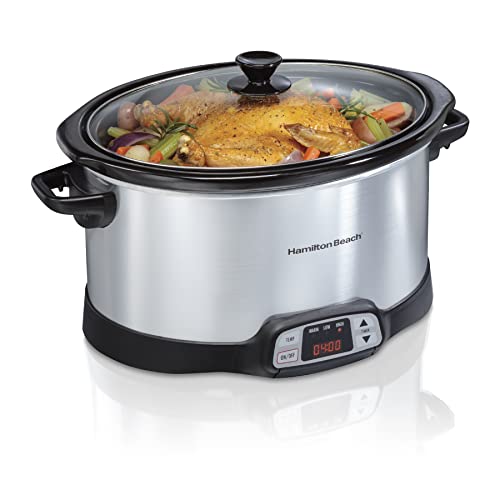
A slow cooker dial hides more logic than three positions suggest, and picking the wrong one is how pot roasts dry out and chili stays lukewarm. Low and High both bring food to a simmer, so the labels describe speed more than final heat.
This guide covers what each position does, how to convert recipes between settings, and where Keep Warm belongs in a real cooking day. If the machine itself is the weak link, our slow cooker recommendations point toward models with steady, predictable heat.
Low and High: Same Destination, Different Speeds
Food safety materials from the USDA describe slow cookers as operating between roughly 170 and 280 degrees Fahrenheit. Manufacturer guidance commonly pegs a filled crock at seven to eight hours on Low to reach a simmer, against three to four hours on High.
Since both settings end at the same gentle simmer, High does not cook food hotter, only faster. That suits lean meats and late starts, but collagen-heavy cuts get less time to soften. Texture is the usual price of speed.
Low fits chuck roast, pork shoulder, dried beans, and broths you start at breakfast. High covers the days that get away from you. Most kitchens need both.
Keep Warm: A Holding Mode, Not a Cooking Mode
Warm holds finished food above 140 degrees Fahrenheit, the line food safety guidance treats as safe hot holding. Below it sits the danger zone between 40 and 140 degrees, where the USDA notes bacteria can double in as little as 20 minutes. Cold food dropped onto Warm climbs through that zone too slowly.
Treat Warm as a parking spot at the end of a cycle or a holding mode for a party, never as a way to cook raw ingredients or reheat leftovers. Reheat on the stove or in the microwave first, then hold on Warm.
Matching the Setting to the Recipe
Tough, well-marbled cuts reward patience, because their connective tissue needs long hours to melt into gelatin. Lean chicken breast, seafood, and delicate vegetables run the other way, turning chalky or collapsing after a full day. Let the ingredients pick the dial before the schedule does.
Dairy, pasta, and rice complicate long runs by tightening or swelling as they sit, so many recipes add them in the final hour on High. Grains are the running exception, since a dedicated rice cooker manages moisture and holding far better than a slow cooker. Our rice cooker buyer’s guide covers machines that hold rice for hours without turning it to paste.
Converting Recipes Between Low and High
The working rule of thumb is one hour on High for every two on Low. A recipe calling for eight hours on Low finishes in about four on High with a similarly filled crock. Treat that math as a starting line.
| Recipe Says Low | High Equivalent | Typical Use |
|---|---|---|
| 4 to 6 hours | 2 to 3 hours | Soup, chicken pieces, beans |
| 8 hours | About 4 hours | Pot roast, pulled pork |
| 10 to 12 hours | 5 to 6 hours | Stock, dense bean stews |
Dense loads lag behind the estimate, so check doneness the first time you run a recipe on a new setting. Programmable timers make the experiment forgiving, because the machine steps down to Warm on schedule instead of cooking until you notice.
Fill Level, Lid Discipline, and Heat Flow
Slow cookers heat from the base and side walls, so a crock filled between half and two-thirds cooks most evenly. Underfilled crocks concentrate food against the walls and run hot, while packed ones strain to reach a safe temperature at all. Batch size is a setting you choose before plugging in.
The lid traps the steam that does much of the cooking, so every peek vents heat the base must rebuild. Manufacturers generally advise adding 20 minutes or more for each look. Lift it only when a recipe says to stir.
Manual Dials Versus Programmable Controls
A manual dial cooks until you walk over and turn it off, which suits weekends and kitchens where someone is usually home. Programmable models count down a set time and drop to Warm on their own, which makes weeknight use realistic when nobody reaches the kitchen until six hours in. That single feature separates machines people trust from machines they babysit.
Higher-end models add probe thermometers that switch to Warm when the food hits a target temperature rather than when a timer expires. That is the closest a slow cooker comes to precision, and it matters most for large cuts. If speed is the real goal, our pressure cooker comparisons cover the tradeoff.
Why You Should Trust Us
Our guidance starts with manufacturer documentation and USDA food safety materials, then layers in the failure patterns that repeat across owner feedback. We do not claim lab results we do not have. Where a figure varies by brand, we say so and show how to check it at home.
Judgments about which setting suits which cook are editorial, and we flag tradeoffs rather than burying them. When a recommendation depends on your model, your recipe, or your schedule, we say that too.
Final Thoughts
For most households the playbook is simple: start tough cuts on Low in the morning, put lean proteins and late starts on High, and let Keep Warm hold finished food for a few hours at most. Those habits matter more than the brand on the base. A machine with steady heat and an automatic Warm switch removes the one mistake a dial cannot forgive.
Manual dials still earn their keep when someone is home, and programmable controls pay off the first time work runs late. Our Pressure and Slow Cookers coverage, including the slow cooker roundup, sorts out which features deserve your money.
Frequently Asked Questions
What do slow cooker temperature settings mean in 2026?
The labels describe how fast food reaches a simmer rather than how hot it gets. Low takes roughly twice as long as High, and Warm only holds finished food above 140 degrees Fahrenheit.
Is High exactly twice as fast as Low?
Close enough for planning, which is why trading one High hour for two Low hours works for most recipes. Dense roasts and packed crocks lag behind the estimate, so check doneness the first time.
Can I put frozen meat in a slow cooker?
Food safety agencies and most manufacturers advise thawing meat first, because frozen pieces linger in the danger zone on the way up. Frozen vegetables go in straight from the bag in most recipes.
Why is my slow cooker simmering hard on Low?
Newer and larger machines often run hot, especially when the crock is underfilled or the lid seals tightly for hours. Cook a bigger batch, or drop to Warm once the food is done and you only need to hold it.
How long can food sit on the Keep Warm setting?
Two to four hours is a sensible ceiling for quality, and the food should stay above 140 degrees the whole time. If holding meals warm is a daily job, our guide to rice cookers covers models built for hours of holding.
Does lifting the lid really add cooking time?
It does, because the escaping steam is heat the base has to rebuild. Manufacturers commonly advise adding 20 minutes or more for every peek, which is why no-peek recipes exist.
Do all brands use the same temperatures for Low and High?
No, dial positions vary across brands and sometimes across a single brand’s lineup. Your manual is the best source, and a simple check is to run High with a few inches of water, then measure it with a reliable thermometer.
Is it safe to leave a slow cooker on while I am at work?
Slow cookers are engineered for unattended cooking, which is the point of the appliance. Manual dials keep cooking until you return, so choose recipes that tolerate extra hours, while programmable models step down to Warm on schedule.