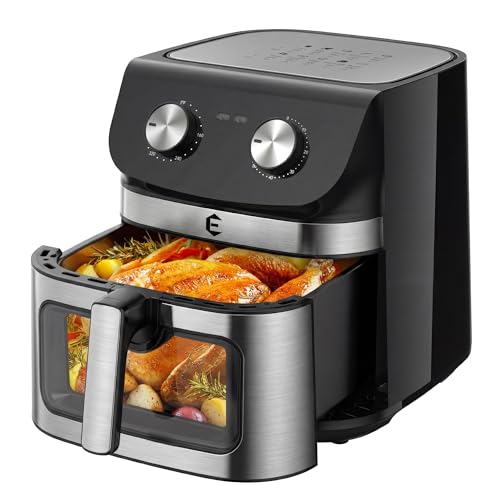
If you are asking why is my air fryer smoking, first notice the smoke color, odor, food, and timing. Most cooking-related smoke comes from grease or residue, while dark smoke and electrical odors require greater caution.
As of August 2026, this guide lists 1 products because troubleshooting should begin before replacement. For broader appliance guidance, visit our air fryers and countertop appliances category.
Smoke Color, Odor, and Timing
Thin white smoke with a greasy food odor commonly suggests rendered fat or old cooking residue. Steam disappears quickly, while actual smoke lingers and usually carries a noticeably burnt smell.
Dark smoke, sparks, flames, or a sharp electrical odor changes the response completely. Stop the cycle, unplug the appliance if safe, and leave the drawer closed when flames are visible.
Grease Load and Food Type
Bacon, burgers, sausage, chicken skin, and similarly fatty foods release grease as they cook. Circulating air can carry droplets upward, where contact with a hot surface produces white smoke.
Try a smaller batch and drain accumulated grease between batches after the appliance has cooled safely. Trimming unnecessary surface fat can also reduce splatter without changing the cooking method substantially.
Old Grease and Hidden Food Residue
Crumbs and oil beneath the basket may survive one cooking cycle before carbonizing during another. The upper chamber can also collect splatter that remains difficult to see during routine basket cleaning.
Clean the basket, crisper plate, drawer, and accessible interior using instructions for your exact model. Our guide to cleaning an air fryer heating element safely explains the additional precautions required overhead.
Loose Liners, Breading, and Lightweight Food
An air fryer’s fan can lift parchment, herbs, breading, and other lightweight material toward the heater. An empty paper liner is especially vulnerable during preheating because no food holds it down.
Use liners only when your manual allows them, and never block the basket’s necessary circulation openings. Press coatings firmly onto food and remove loose crumbs before starting the cooking cycle.
Oil, Marinades, and Cooking Temperature
Air frying generally requires a light oil coating rather than a pool in the drawer. Excess oil increases splatter, while sugary sauces and marinades can drip, scorch, and create dark smoke.
Pat away excess marinade and choose a recipe temperature appropriate for the ingredient. Changing oil amount, batch size, and temperature separately makes the actual cause easier to identify.
Airflow, Accessories, and Counter Clearance
Covered vents and poorly fitting accessories can disrupt circulation and concentrate heat where it was not intended. Keep the external intake and exhaust unobstructed, with the clearance required by your owner’s manual.
Inside the drawer, avoid cookware or liners that cover essential basket openings unless the manufacturer approves them. Accessories must fit without contacting the heater, fan area, or drawer mechanism.
Electrical Symptoms and Appliance Condition
Smoke from an empty, thoroughly cleaned air fryer is more concerning than smoke from fatty food. Stop using the appliance if the cord overheats, a breaker repeatedly trips, or the housing appears melted.
A grinding or stopped fan can also indicate a fault requiring manufacturer support or qualified service. Do not perform another cooking trial merely to confirm suspected wiring, motor, or heating damage.
Safe Steps to Stop the Smoke
- Stop the cooking cycle and assess whether flames, sparks, or electrical odors are present.
- Unplug the appliance if doing so does not require approaching flames or damaged wiring.
- Keep the drawer closed when flames are visible, and follow local fire safety guidance.
- After cooling, remove food and check for grease, burnt crumbs, loose paper, and scorched coating.
- Empty cooled grease into a suitable waste container instead of pouring it down a drain.
- Clean and dry removable components according to the manufacturer’s instructions.
- Inspect only accessible interior areas without bending the heater or inserting metal tools.
- Resume use only when the appliance is clean, dry, intact, and free from electrical symptoms.
Never pour water into a hot or energized electrical appliance, even when grease appears responsible. Do not spray cleaning liquid into the fan, heating assembly, controls, or other electrical openings.
Why You Should Trust Us
We separate common cooking causes from symptoms that suggest an appliance fault. Our diagnosis prioritizes smoke appearance, odor, food type, residue, airflow, and manufacturer-approved cleaning procedures.
We did not conduct physical testing for this troubleshooting guide, and appliance designs vary considerably. Your model’s manual remains the controlling source for cleaning access, compatible accessories, required clearance, and service instructions.
Final Thoughts
No products were supplied for comparison, so naming a best overall, value, or specialized replacement would be unsupported. The best first response for ordinary white smoke is cleaning thoroughly, reducing grease, and changing one cooking variable at a time.
Replacement becomes reasonable when smoke continues in an empty clean chamber or electrical symptoms appear. Before buying, consult our air fryers at affordable prices guide and prioritize capacity, cleaning access, countertop clearance, and warranty coverage.
If the problem is an odor rather than visible haze, use our guide to air fryers that smell like plastic. A new-appliance odor and smoke caused by melting material require different decisions, so avoid treating them as interchangeable.
Frequently Asked Questions
Why is my air fryer smoking in 2026?
The likely causes remain grease, old residue, loose food, paper liners, sugary drips, or excessive oil. Dark smoke, sparks, melting, or electrical odors require immediate shutdown rather than routine cooking adjustments.
Is a small amount of white smoke normal?
White smoke can occur when fatty food releases grease onto a hot surface. It still signals that you should reduce the grease load and clean accumulated residue before another cooking session.
Why does my air fryer smoke only when cooking bacon?
Bacon releases substantial rendered fat that can splatter or collect beneath the basket. Smaller batches and carefully draining cooled grease between batches can reduce smoke during later cycles.
Can parchment paper make an air fryer smoke?
Yes, loose parchment can rise into the heating element and burn when the fan starts. Follow your manual, use correctly sized liners, and ensure permitted paper is securely weighted by food.
Can I put water in an air fryer to stop smoking?
Do not pour water into a hot or energized appliance because electricity and burning grease create serious hazards. Use water inside the drawer only if your exact manufacturer’s instructions explicitly authorize that technique.
Why does my clean air fryer still smoke?
Residue may remain around the upper interior, or the food may be releasing excessive grease. Smoke from an empty, correctly cleaned appliance suggests stopping use and contacting the manufacturer for guidance.
Should I replace an air fryer that produces black smoke?
First stop using it and identify whether food, paper, or another material burned inside. If black smoke returns after proper cleaning, or damage is visible, arrange service or replacement instead of retesting.
How can I prevent air fryer smoke from returning?
Remove crumbs and grease after each use, once every component is safely cool. Keep vents clear, avoid excessive oil, secure permitted liners, and inspect the upper chamber periodically using model-specific instructions.